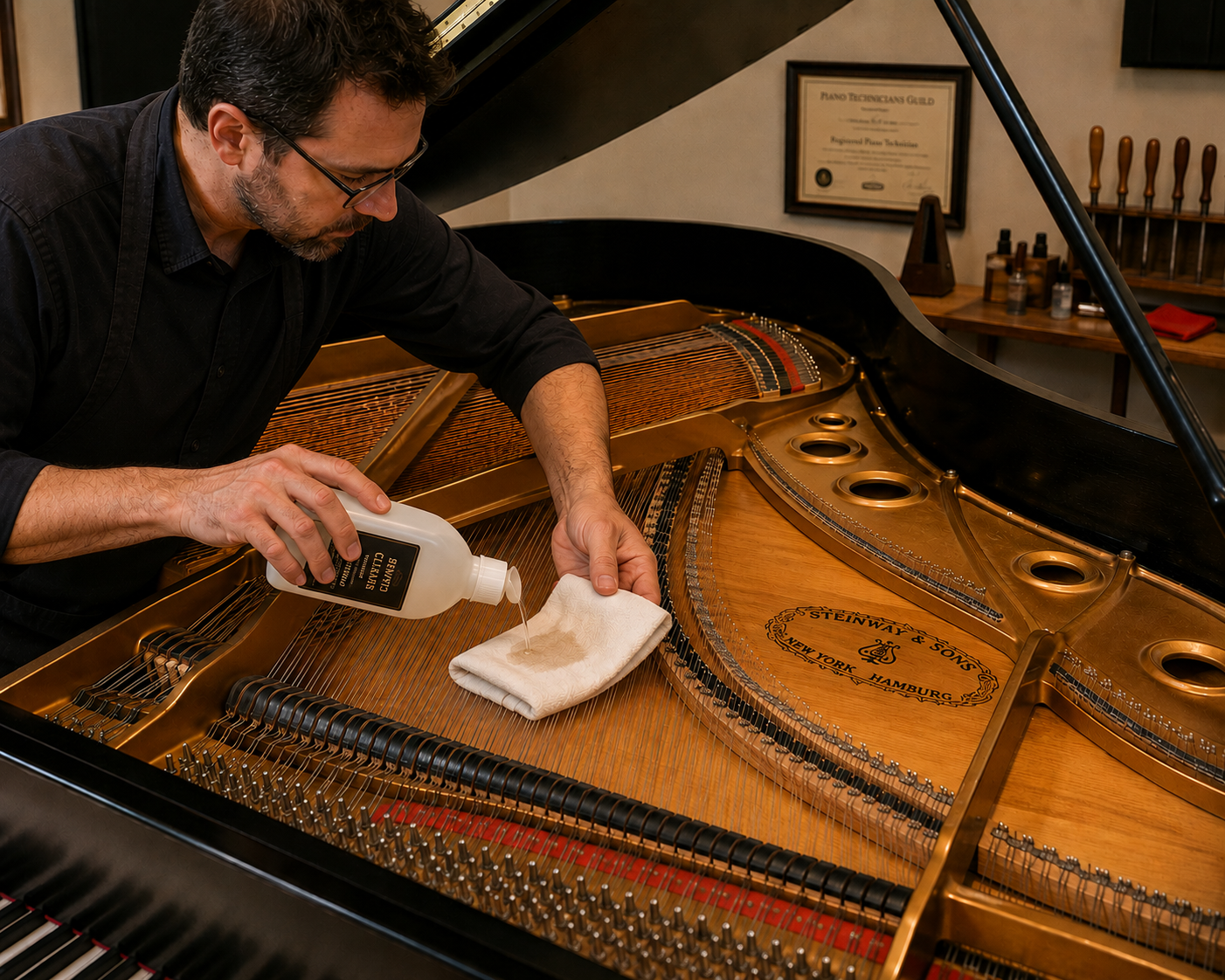
Wooden keys, bushings, and action parts swell and shrink with the air, so a piano repair specialist in Plano, TX sees sticky keys, uneven touch, and small gaps throughout the year. You can spot early signs yourself with a few simple checks. If a key sticks or the touch changes, that's the time to call Plano Piano Tuner rather than try a fix at home.
How North Texas Humidity Harms Acoustic Piano Keys and Action
Wooden key bushings soak up and release moisture as the air changes. Swollen ones grip the key pins and make keys stick, and shrunken ones leave play that lets keys wobble sideways.
The action (hammers, springs, dampers) shifts too, so regulation drifts out of adjustment. Good acoustic piano repair in Texas starts with understanding the cycle.
What You Can Check Without Opening the Piano
Try these five checks. Leave the case closed and don't take anything apart; you only need to play the piano and look at it:
When to Call a Piano Repair Specialist
Call if a key stays down for more than a moment after release. Keys that feel heavier or lighter than their neighbors right after a tuning deserve the same attention. Cracked wood and loose keytops are clear signals too. After a move or a humidity spike, don't wait.
What a Plano Piano Repair Specialist Will Do First
The first visit is mostly inspection. A good technician will work through steps like these, and the technician does the opening-up, not you:
Ask about the room, since humidity is the first thing to rule in or out.
Test the action parts under the keys and replace felt, springs, or wooden components as needed.
Regulate the action so the touch is even from key to key.
Our piano repair specialist service covers piano key repair in TX, including keytop replacement.
Get Your Plano Piano Back in Balance
Contact Piano Doctor to talk through what your keys and action need. Call or text (214) 392-0000 to schedule piano service in Plano, Dallas, Frisco, or elsewhere in the metroplex.
Frequently Asked Questions
Can humidity really damage a piano's keys and action?
Yes. Wood expands and contracts with humidity swings, so keys swell and stick when the air is damp and shrink and develop play when it's dry. Action regulation drifts as well, changing how the hammer responds to your touch.
Should I use a humidifier or dehumidifier in my piano room?
It depends on the season. Use a humidifier when the air is dry, usually when the heat is running in winter, and a dehumidifier when the room feels damp in spring and summer. The goal is steady air, so a small hygrometer in the room helps you see which way it's swinging.
How often should I have my piano serviced in North Texas?
Ask your technician to set a schedule based on the instrument and the room. Book an inspection sooner after a move, when the seasons change, or whenever you notice sticking. A regular piano tuner in Plano can track these changes year to year.
What is the difference between piano regulation and piano repair?
Regulation adjusts the geometry of the action so keys respond evenly and hammers strike true. Repair fixes broken or worn parts such as bushings, springs, keytops, or cracks. Humidity damage often needs both.
Text or call Piano Doctor. Texting is the fastest way to reach us.

