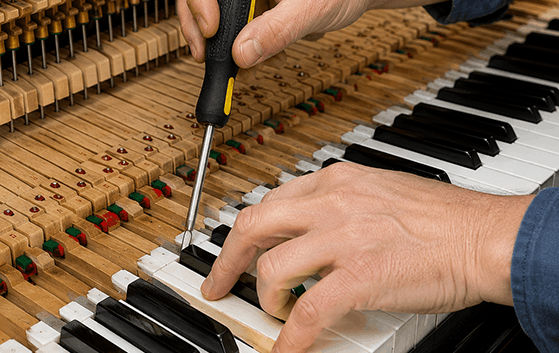
A sticking key or a new buzz is usually what sends someone searching for acoustic piano repair Texas. Check for debris, look at the key slip, and keep the room's humidity steady before anything else. If the key still binds after that, call a technician and leave the screwdriver in the drawer.
Why Pianos Stick and Rattle: Start With Humidity
The wood and felt inside your piano swell and shrink as the air in your house changes. Felt in the pivot holes of a key is a common culprit, since it can swell and grip the pin without any damage to the piano.
Small objects come next: coins, paper clips, and lint slip between keys and block their return. Rattles and buzzes often come from loose internal parts, and they take a trained ear to pin down.
Safe First Checks You Can Do Right Now
Start with three low-risk steps.
When to Stop
Don't open the case or take off panels. Hammers, strings and tuning pins need trained hands and proper tools.
Stop if a key won't return at all, a key cracks when pressed, or a group of keys suddenly sticks after working fine. Any of those deserves a professional look. A buzz that wanders or changes with the weather also needs a technician.
Humidity Control for Year-Round Protection
Too dry and wood shrinks; too humid and felt swells. A humidifier in winter and a dehumidifier in muggy months can help, and a small hygrometer near the piano shows you the swings. Ask your technician what range suits your instrument and your house.
What Professional Piano Technician Repair Looks Like
Fixing a sticking key takes precision tools and bench space, so it isn't a living-room job. If you're comparing providers, ask about their training.
Regulation adjusts key height, action depth and touch, while voicing shapes the tone of the hammers. A good technician will also tell you whether a temporary fix suits your piano's age or whether parts need replacing.
Plano Piano Tuner offers piano key repair for DFW homes. We'd call that the right way to approach any piano key repair tx owners are weighing on an older model.
Book Piano Service with Plano Piano Tuner
Bring a list of which keys stick, when it began, and any humidity changes you've noticed. Call or text (214) 392-0000 to schedule piano service across the Dallas–Fort Worth area.
Can I oil piano keys to fix sticking?
No. Oil can collect dust and won't cure a swollen or worn part. Sticking keys need a technician's diagnosis and adjustment.
How long does professional piano key repair take?
It depends on how many keys are affected and what's causing the problem. A single key is quicker than several keys or regulation, and your technician can give you an estimate after looking at the piano.
Will humidity control alone fix sticking keys?
Probably not by itself. It helps protect the piano going forward, but a key that already sticks usually needs a technician to find the cause.
What's the difference between a piano tuner and a piano technician?
A tuner adjusts pitch. A technician also handles repair, regulation, voicing, and restoration, so ask any provider about their training.
Text or call Piano Doctor. Texting is the fastest way to reach us.

