
Piano Maintenance

Basis Rules for Piano Maintenance
  • Tune your piano regularly, twice a year, summer/winter or fall/spring. That is when the barometric pressure patterns and humidity levels are most similar and regular--and can impact the long term steadiness of your instrument.
  • Ask your technician to do a minor "touch-up" regulation at each tuning. This will prevent most instances of unnecessary wear and breakage.
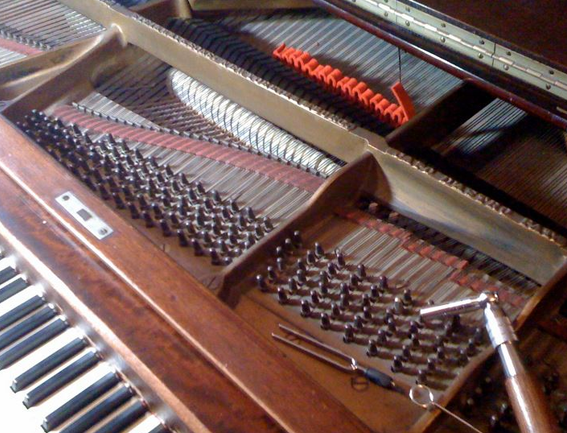
  • Pianos are mechanical wonders with in excess of 8.000 moving parts in it. Therefore. a full regulation should be done every 2 to 5 years. In essence a piano requires the same regularity of maintenance that a car or A/C unit does.
  • Refrain from any do-it-yourself urges. Musical instruments, of all kinds, are carefully calibrated and their repairs should ONLY be undertaken by trained and degreed professional technicians. What may appear to an owner as a simple fix can lead to irrevocable damage to your piano if not done correctly.
  • Keep your piano away from space heaters, heating registers, radiators, fireplaces, air conditioning vents, open doors and windows. Subjecting it to extreme fluctuations of temperature and humidity levels can do major damage. Today's home construction kills the old adage: "Keep a piano away from an outside wall".
  • Do not expose your piano to direct sunlight as this will damage and fade the finish, or even cause strings to break. On a grand piano, keeping the lid flap folded over the remaining lid will invariably cause discoloration on the area covered by the lid flap. The degree of discoloration will depend on the intensity of the UV rays.
  • Hydrostatic conditions will greatly impact your piano's well-being. Pianos should be kept at a constant 45% humidity. Your piano's number one enemy is fluctuations in temperature and humidity.
  • Keep small children away from an instrument. A 3-year old will quickly perceive a piano as a percussion instrument and bang away on it with fists. The damage that can result from this can be substantial to your pocket book.
  • Keep any liquid, plants, vases, drinks, ashtrays, food away from your piano. Even a small amount of condensation can cause irreversible damage. The only 3 items, in addition to music scores, that should be on a piano are: a pencil, an eraser and a metronome (if you use one).
  • To clean your instrument, feather-dust the piano first (dust is abrasive, so wiping it first can cause scratches), then wipe with a soft, damp cotton cloth. Always wipe in the direction of the grain. Then, wipe up any excess moisture with a similar dry cloth.
  • Do the same thing as above to clean your keys, or just a small amount of all-purpose Windex. The cloth should not be soaked with Windex, but just slightly damp.
  • Professional piano technicians use industry specific cleaning agents, both for keys and finishes. They are costly, but will greatly enhance your instrument's luster.
  • Do not touch piano strings with your fingers. Oil and skin moisture will cause oxidation.
  • Use brass polish (Brand: Brasso) to clean the pedals.
  • If you have a grand piano, do not attempt to clean the inside, neither the soundboard nor the strings. This should only be done by a certified technician.
Regulation for smooth key response
Voicing to shape the tone
Key repair for sticky keys


Piano Maintenance Services TX: Care That Keeps Your Piano Singing for Decades

Smart habits. Skilled hands. Steady conditions. Piano Doctor keeps your piano beautiful, year after year.

Piano Maintenance Services TX

Your Piano Needs Care Just Like a Car Does

A piano holds more than 8,000 moving parts. When one part slips, the whole sound suffers. That is why piano maintenance services TX owners rely on matter so much. At Piano Doctor, we help you stay ahead of trouble.


Piano Maintenance Services TX: A Simple Plan

You need a steady rhythm, not a complicated schedule:

  • Tune twice a year. Pick two calm seasons, such as spring and fall.
  • Add a light touch-up at each tuning. It reduces wear.
  • Book a full regulation every two to five years. It restores an even touch.


Piano Humidity Control Service: Your Best Defense

Humidity harms a piano more than almost anything else. Wood swells in damp air and shrinks in dry air. Strings drift flat. Keys stick.

A piano humidity control service helps keep conditions steady. Experts suggest about 45 percent humidity. Steady air also makes every tuning last longer.


Professional Piano Care Services Beyond Tuning

Our professional piano care services cover the whole instrument:

  • Regulation for smooth key response
  • Voicing to shape the tone
  • Key repair for sticky keys
  • Safe, careful cleaning
  • Moving and appraisals


Easy Habits for Home

  • Keep your piano away from vents, fireplaces, and sunny windows.
  • Keep drinks and plants off the lid.
  • Dust gently with a soft cloth.
  • Leave the inside to a trained technician.

These simple steps protect your piano every day.


Ready to Start?

We have serviced all types of pianos for over 30 years. Call or text Piano Doctor at (214) 392-0000. Texting is the fastest way to reach us.


FAQs

How often do I need piano maintenance services in TX?
Tune twice a year. Add a full regulation every two to five years.

What does a piano humidity control service do?
It keeps the moisture level consistent. That way, the wood, keys, and strings stay protected.

What’s the ideal humidity? 

Aim for 45 percent — most experts go with that.

What’s included in professional piano care? 

The basics: tuning, regulation, voicing, cleaning, and repairs.

Can you clean the inside yourself? 

Don’t try it. The strings and soundboard are delicate and can get damaged fast.

Where’s the best place to put your piano? 

Pick a spot away from vents, fireplaces, and any sunlight. Those mess with the instrumen

TAP TO CALL US

Loading... logo